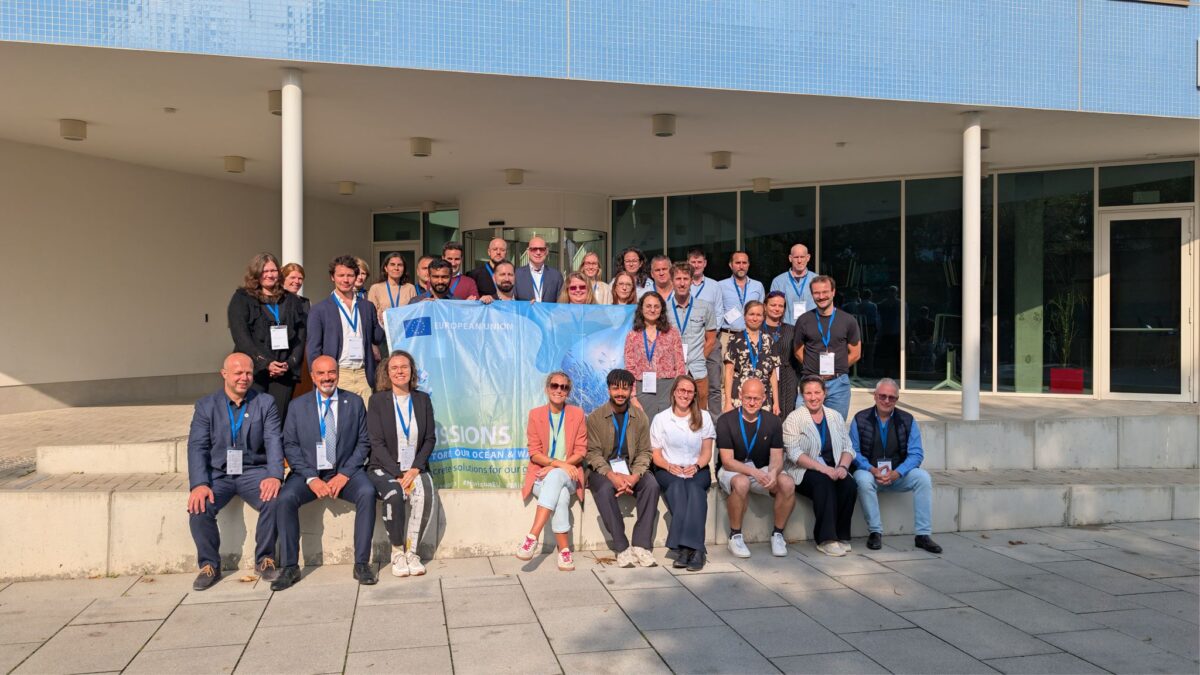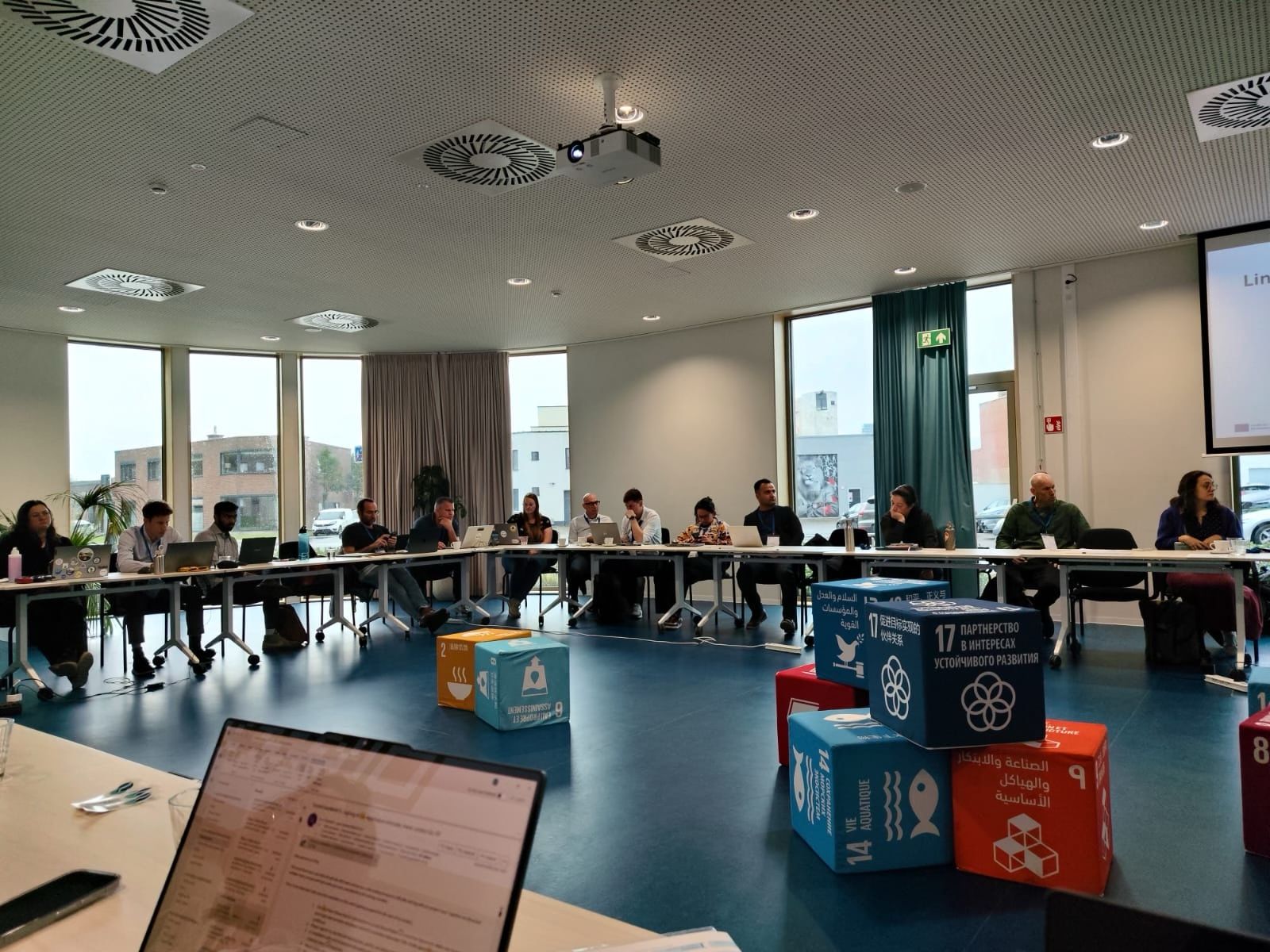
VLPF travelled to Ostend, Belgium, for the kick-off meeting of Tools4CleanBANOS. This new European project is funded by Horizon Europe, the EU’s main programme for research and innovation, and is part of the EU Mission Restore our Ocean and Waters. The project is coordinated by VLIZ, the Flanders Marine Institute, and brings together 20 organisations from 10 countries. Over the next four years, the partners will work together to stop litter and plastics before they reach the North Sea and the Baltic Sea.
Cities and regional governments are often the ones responsible for keeping their coasts and waters clean. However, they rarely have clear, reliable information to guide their choices, and often have to piece together results from many separate studies. Tools4CleanBANOS will create a “toolbox” to help them. This digital tool will bring together tested scientific methods and data, showing authorities how to find litter, remove it and prevent it from reaching the sea in the first place. It will also help them identify where pollution comes from, choose the right actions to tackle it, and expand the solutions that work. The toolbox will be designed together with the authorities who will use it, and its data will remain freely available to others after the project ends.
Before it is shared more widely, the toolbox will be tested in five real locations, called “use cases”, each facing a different type of pollution. In Kiel, Germany, partners will focus on lost and discarded fishing gear. In Riga, Latvia, the target is cigarette butts on beaches. Rotterdam, in the Netherlands, will work on reducing plastic across its river delta, while Oslo, Norway, will look at microplastics released by car tyres and collected in snow. The fifth use case is in Portsmouth, in the United Kingdom will focus on end-of-life boats dumped and abandoned by their owners in the environment. Other regions will then be able to apply for funding under the same project (cascade funds) to adopt those solutions.
VLPF leads the use case In Portsmouth, on the south coast of England, together with Langstone Harbour Board. Here, Portsmouth and Langstone Harbours are shallow coastal waters with mudflats, saltmarshes and protected habitats, much like the Venice Lagoon. Just as Venice meets the Adriatic Sea through its inlets, these two harbours open onto the Solent, the stretch of sea between the Isle of Wight and mainland England. Many of the boats left there are made of fibreglass, a very hard to recycle plastic. As they sit on moorings and along the shore, they slowly break apart into microplastics, tiny plastic particles that spread into the water.
The problem is already reaching the food chain. In 2024, researchers from the University of Brighton found fibreglass particles in oysters and mussels collected near a boatyard in Chichester Harbour, just a few miles east of Portsmouth. It was the first time fibreglass had been found entering the food chain. The oysters contained 11,220 particles per kilogram and the mussels 2,740, raising concerns for marine life and for the people who eat these shellfish. The researchers called for better management of end-of-life boats to stop the contamination from spreading.
Our plan is to find these boats early using the EOL Boat Buster app. VLPF developed the app within JOINABLE, a project funded by the Interreg IPA ADRION Programme, and it is now being tested in six countries around the Adriatic and Ionian Seas. Once the boats are identified, we will work with local authorities to remove them and look for ways to reuse or recycle the fibreglass instead of sending it to landfill. The approach builds on our experience in Venice, where we have already removed 39 end-of-life boats from the lagoon.
Moreover VLPF will also involve local communities in collecting data on pollution, run awareness activities, and help other regions that want to adopt the project’s solutions. From the Venice Lagoon to the Solent, we share the same challenge: acting before plastic breaks down into pieces too small to recover!
VLPF thanks VLIZ for hosting a productive kick-off and all the project partners for their contributions.