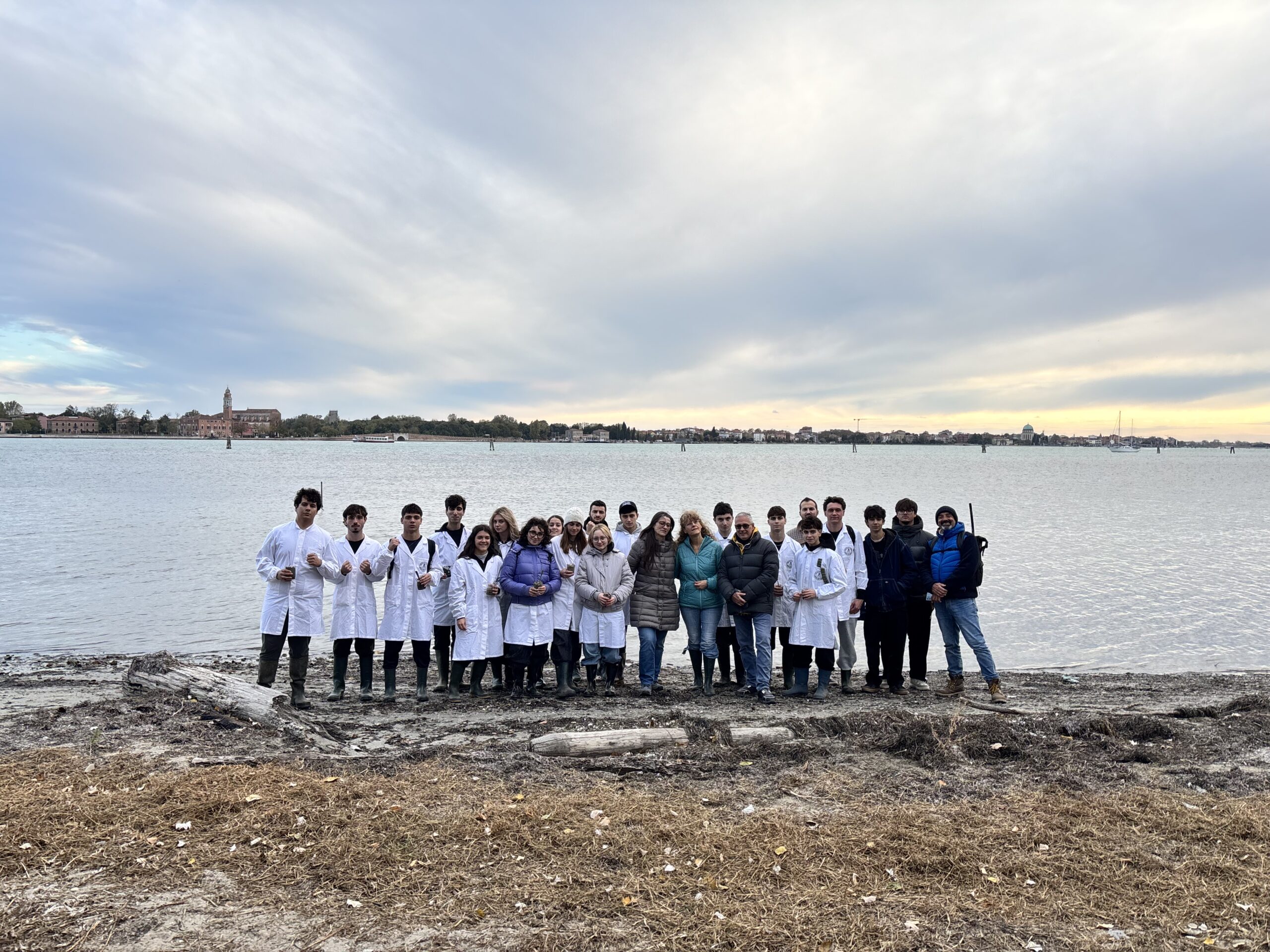
On the 3rd and 4th of November, students and teachers from the “G. e M. Montani” Technical Technological Institute of Fermo returned to Venice for two days of fieldwork with Venice Lagoon Plastic Free. This is the third consecutive year that the Montani Institute has brought its students to the lagoon, and this edition saw a new addition: alongside the Chemistry Department, which has supported the collaboration since its first year, the Aeronautics Department also took part. The activities were carried out within the JOINABLE project, by carrying out a clean-up and a marine litter monitoring session with the VLPF team. Moreover the team aimed collecting sand samples from different points along Venice’s beaches for microplastic analysis.
The work began on the 3rd of November on the Island of Certosa, where students collected standardizedsamples of sand from the shoreline before joining a clean-up of the area with a start recovery of one 10 mters pipe of PVC that was stranded in sinking in the shallow waters of the islands and a piece of High Density plastic material also stranded. The following day, activities moved to Alberoni, at the southern tip of the Lido, for sample collection and a monitoring of stranded litter. Using the Shoreline Monitor app, the group classified 773 items in transect of 100 meter, and the three most common categories identified were fragments of non-foamed plastic, plastic lids and plastic mussel mesh bags. The presence of mussel bags is a reminder that sea-based activities such as mussel farming also contribute to the litter reaching our beaches, alongside waste from urban and recreational use.
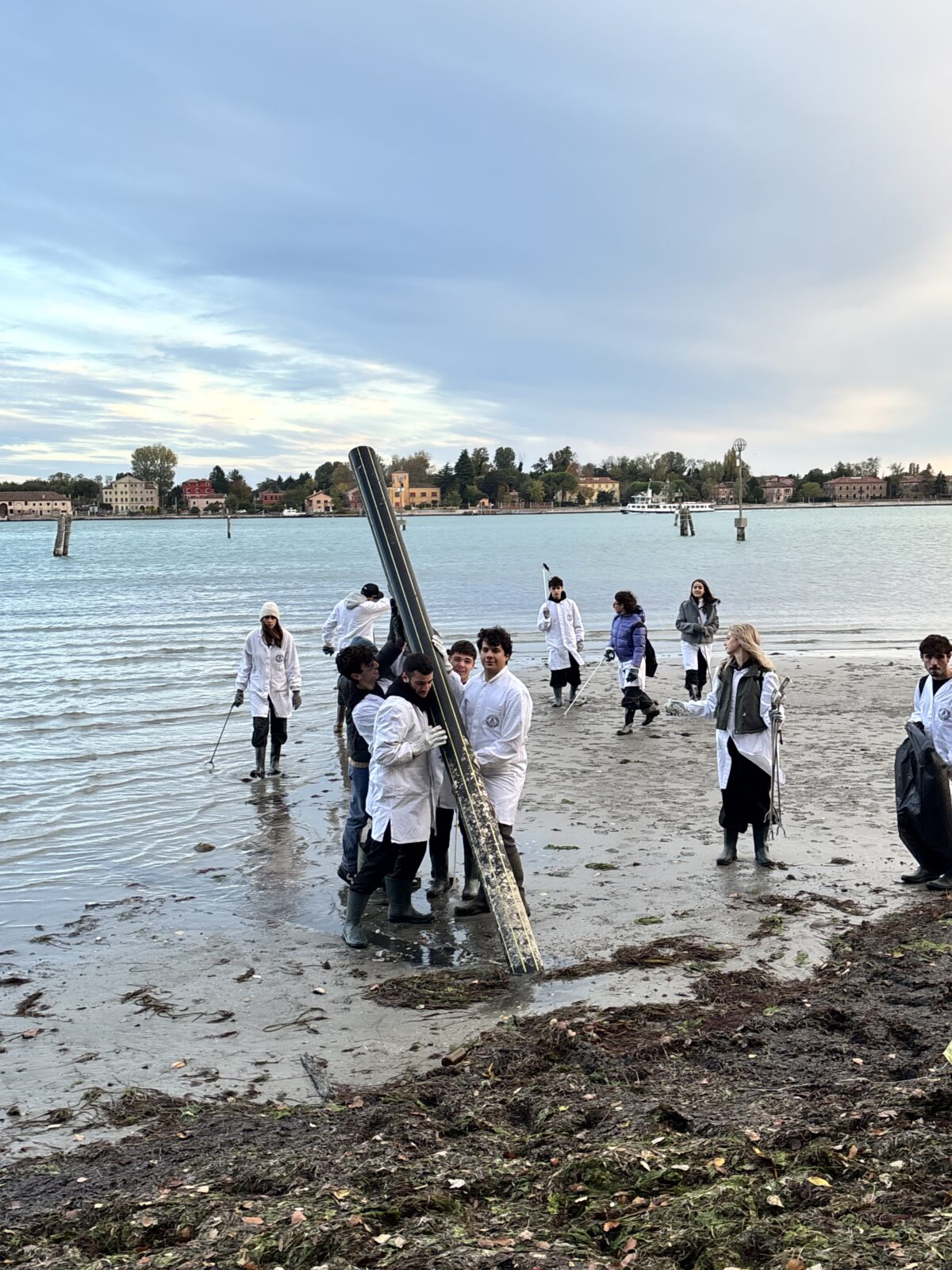
Across the two days, 117.08 kg of waste was removed from the shoreline. Of this, 96.48 kg was plastic, more than 80% of the total.
For each site, the SeaClear 2.0 app also calculated a “plastic footprint”. This shows how much plastic was collected by comparing it with the plastic waste one average person produces in a year (about 56 kg in Italy and 36 kg across the EU). At Certosa, volunteers collected 93.34 kg of plastic. That is as much as 1.66 average Italians, or 2.59 average EU citizens, throw away in a year. At Alberoni, 3.14 kg was collected, so the figures were 0.06 and 0.09, less than a tenth of one person’s yearly plastic waste.
These results add to the data gathered in previous years. Together they help build a clearer picture of how waste builds up in different parts of the lagoon and along the Lido.
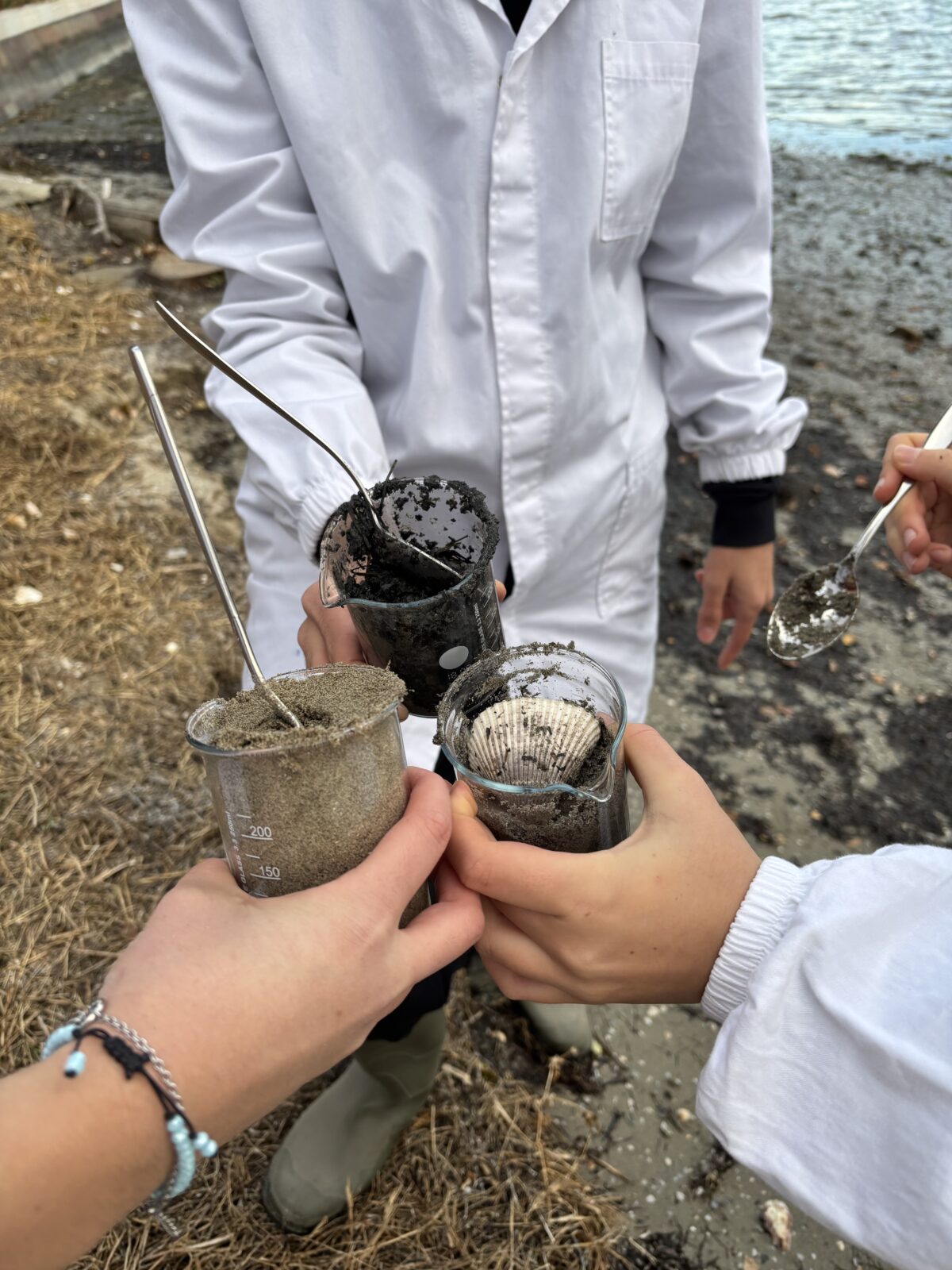
The samples will now be analysed in the Montani Institute’s laboratories. There, students will separate, count and classify the microplastics found, and identify the polymers they are made of.
Since 2024, this partnership has given students the chance to step out of the classroom and take part in real research, from fieldwork to laboratory analysis. For VLPF, it is a way to bring together education, citizen science and data collection, so that young people can see the scale of plastic pollution for themselves and help to understand it. We thank the students and teachers of both departments for their commitment and look forward to sharing the results of the analysis.