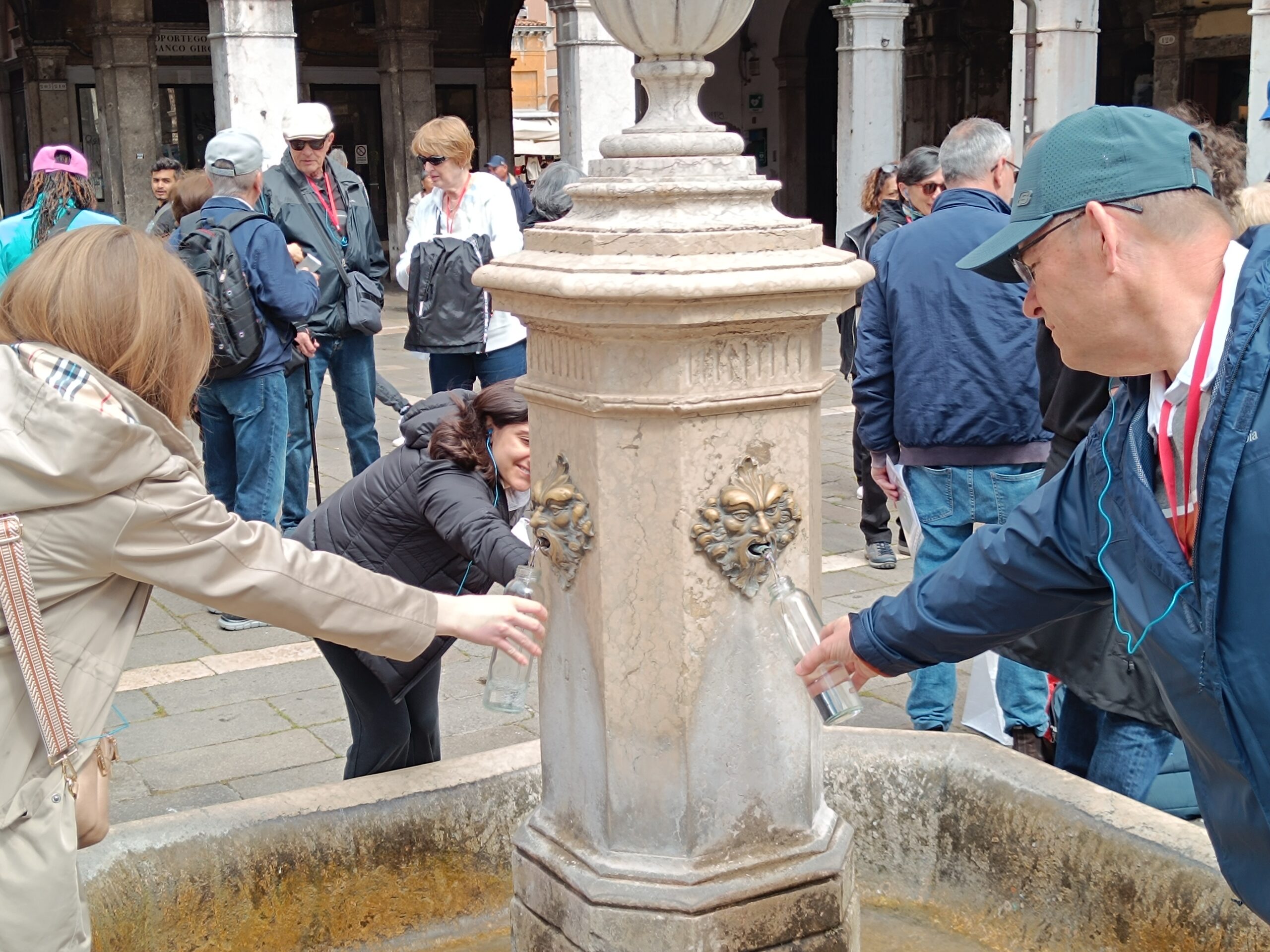
Venice Lagoon Plastic Free continues its collaboration with Trafalgar, one of the world’s largest tour operators. This partnership brings travel groups face to face with the reality of single use plastic (SUP) pollution in one of the world’s most fragile marine ecosystems.
The scale of the problem stretches far beyond what happens on Venice’s shores. Globally, only 9% of the plastic ever produced is recycled. 19% is incinerated, 49% ends up in landfills, and the remaining 22% is mismanaged, burned in the open, dumped into waterways, or handled through unsafe disposal systems. The vast majority of plastic never returns to the economy as a useful resource, and recycling alone cannot close that gap. A truly circular plastic economy requires action across the entire value chain, from designing products for reuse and recyclability to improving collection, sorting, infrastructure, and markets for recycled materials. The goal is not simply to manage more waste. It is to create less waste in the first place.
Few places make that challenge as tangible as Venice. According to the most recent official data, the city records 5.88 million overnight tourist arrivals, while total annual visits, including day-trippers, are estimated at 25 to 30 million. At an average of two plastic bottles consumed per person per day, the potential bottle count runs into the tens of millions each year, and given how closely land and water meet in this city, a considerable share of it ends up in the lagoon. Pastic water bottles are in fact the second most common waste item found in VLPF’s monitoring data.
It is against this backdrop that the partnership with Trafalgar takes shape. VLPF volunteers meet regularly with Trafalgar travel groups during their stay in Venice, introducing them to the issue of marine litter and single-use plastic pollution and to the small actions visitors can take to reduce their footprint. Each group receives a reusable glass bottle, together with a map of 141 public fountains across the city, developed in partnership with the Venetian association Venice Tap Water. The map also carries information on the quality and safety of Venice’s drinking water, eliminating the common touristic misconception that the city’s tap water isn’t potable. What follows is a simple shift in habit: instead of buying disposable plastic bottles throughout their stay, travellers refill at the city’s fountains. Thousands of disposable plastic bottles have already been avoided as a result.
The initiative reflects VLPF’s broader commitment to the EU Mission Restore our Ocean and Waters, which works to protect and restore the health of Europe’s seas and inland waters through research, innovation, active citizenship, and a blue circular economy. Working alongside Trafalgar, Venice Lagoon Plastic Free continues to show that responsible tourism is not just an aspiration for Venice, but something achievable one refill at a time.